Chapter 01
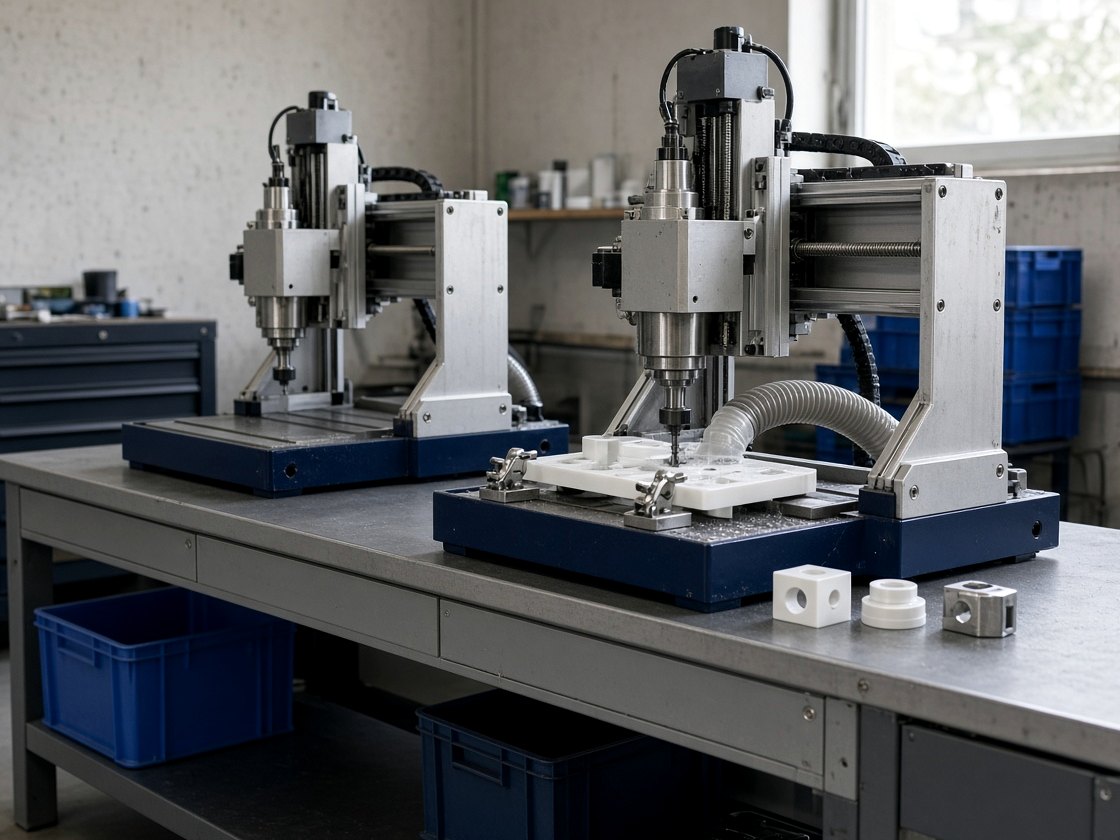
Bench-top CNC in a PE line
PE Line is aimed at smaller production spaces using bench-top CNC for light milling and repeatable daily work. The focus is consistent output, sensible machine placement, and enough room to handle material without slowing the line.
PE Line starts with the parts that must leave the bench the same way every day. Tell us whether you are cutting MDF templates, plastics, thin aluminium, or mixed sheet stock, and note the usual thicknesses and sheet sizes you handle. In smaller South African production spaces, extractor placement, plug points, and where offcuts land matter just as much as spindle size.
A few photos of the current bench area help fix the line around real movement, not guesses. Show the machine position, material stack, and where finished parts are checked or packed. That makes it easier to spot pinch points around clamping, tool changes, chip clearing, and restart checks after a power interruption.
Chapter 02
What the PE brief should cover
The useful brief for PE Line names the material, part count, cutter sizes, and what must stay accurate from one run to the next. Include any operation that slows the day down, such as edge clean-up, repeated zeroing, or moving stock across the room between cuts. A smaller line works better when every step has a place and every repeat task has a check.
Send PE Line details with the bench or machine area size, plus the material and thickness you run most often. Add the planned timing, batch size, and any part, tool, hold-down method, or process that keeps causing rejects or wasted time. If a machine must fit around existing benches or storage, note that as well.
- Bench layout around real part flow
- Checks for repeatable daily output
- Photos of the current machine area
Chapter 03
South African workshop conditions
PE Line has to work in rooms where bench space is tight and stock often shares space with packing, assembly, or storage. Mention any existing jigs, dust extraction, compressor use, or manual operations that happen beside the CNC. If one-off rush jobs interrupt the day, separate those from the repeat work so the line can be planned around the parts that actually pay their way.
Coastal humidity around Gqeberha can affect sheet storage, rust prevention, and how often machine surfaces need cleaning. Inland dust loads change maintenance on rails, shields, and extraction points, while power cuts change how long uninterrupted runs can safely be scheduled. For light milling, note the alloy, cutter wear, and chip handling if aluminium jobs are part of the line.
Operated by Astros Marketing (Pty) Ltd from 2 Makro Place, Sunnyrock 1401.
Chapter 04
Details that sharpen the brief
Brief Pe Line with pictures of the bench or floor space, material and thickness, planned timing, and any parts, tooling, or processes that already let you down. Use an honest subject line.
File the PE Line note with the job card while the setup is still fresh. When a buyer, school, or client asks what material, cutter, or thickness was used, the record is there with the same photos and run details.