Chapter 01
Bench layout for Bellville runs
Bellville branch suits compact CNC setups where bench space, sheet handling, and repeatable parts all need proper thought. For Bellville workshops, we focus on desktop CNC and light milling layouts that suit steady day-to-day maker work.
Bellville showroom work often starts with a compact bench, sheet stock leaning against one wall, and a need to cut repeat parts without wasting setup time. We look at the material first, whether that is MDF, birch ply, acrylic, or thin aluminium, then match cutter diameter, clamping method, and dust collection to the actual pieces being made. In Cape Town conditions, windblown dust, shared workshop space, and power cuts all change how a desktop CNC should be arranged.
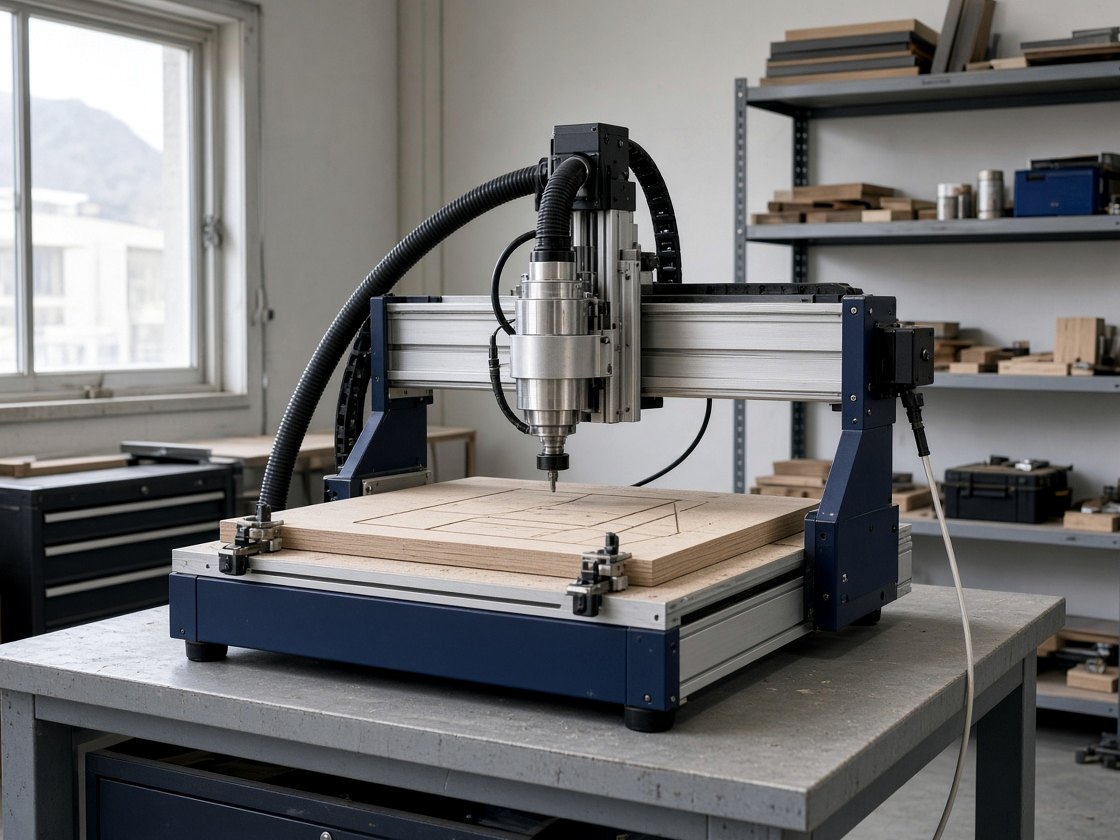
A photo of the bench and machine area tells us more than a parts list on its own. Include the spoilboard condition, cable routing, vacuum hose position, and where full sheets or blanks are staged before cutting. That makes it easier to note reset points for hold-down, cutter changes, and repeat jobs that must match the previous batch.
Chapter 02
What the Bellville brief covers
The page is aimed at benchtop setups where small production runs matter more than one-off experiments. Notes should show target part size, sheet thickness, expected edge finish, and whether the machine is slotting, profiling, drilling, or light facing work. For a Bellville workshop, a tidy process usually matters as much as spindle power.
Before widening the setup, compare the Bellville branch notes with any matching machine notes, accessory lists, and cut records you keep on hand. Describe the current bench, the stock being loaded, and any marks left by chatter, lift, or missed zeroing. If there is a problem run, mention feed rate, spindle setting, and how the material was held.
- Bench plan for repeatable small parts
- Photos of spoilboard and hold-down points
Chapter 03
Bellville workshop conditions to note
Bellville jobs can involve limited bench depth, mixed materials, and sheet handling through tight doorways or shared units. Existing jigs, a preferred CAM workflow, or a spindle that struggles in thicker stock should be listed from the start. Keep daily production pieces separate from test cuts so settings can be checked without confusing the main run.
Coastal air around Cape Town affects rust prevention, storage, and how often rails and collets should be cleaned. Dust from MDF and similar board stock builds quickly in smaller rooms, so extraction and cable protection need proper attention. Where power interruptions are common, it helps to note which jobs can restart cleanly and which ones need a fresh datum and a new blank.
Operated by Astros Marketing (Pty) Ltd from 2 Makro Place, Sunnyrock 1401.
Chapter 04
Photos and machine notes to send
Send the Bellville brief with photos of the bench space, materials being cut, target part sizes, and any spindle, feed, or hold-down issues already seen.
Add cutter names, stock thickness, and any trouble seen with chip clearing, hold-down, spindle speed, or tool deflection. That gives the project record enough detail to link the setup to the work being produced.