Systems
Light Milling Kit
The Light Milling Kit is for desktop CNC owners who want a machine setup better suited to careful work in aluminium, engineering plastics, and other tougher stock than routine routing material. It focuses on the extra hardware and setup checks that matter when cutter load, workholding, and spindle settings need closer control. For South African workshops, that usually means thinking about chip cleanup, bench rigidity, and reliable restart habits after power interruptions.
From routing to lighter milling
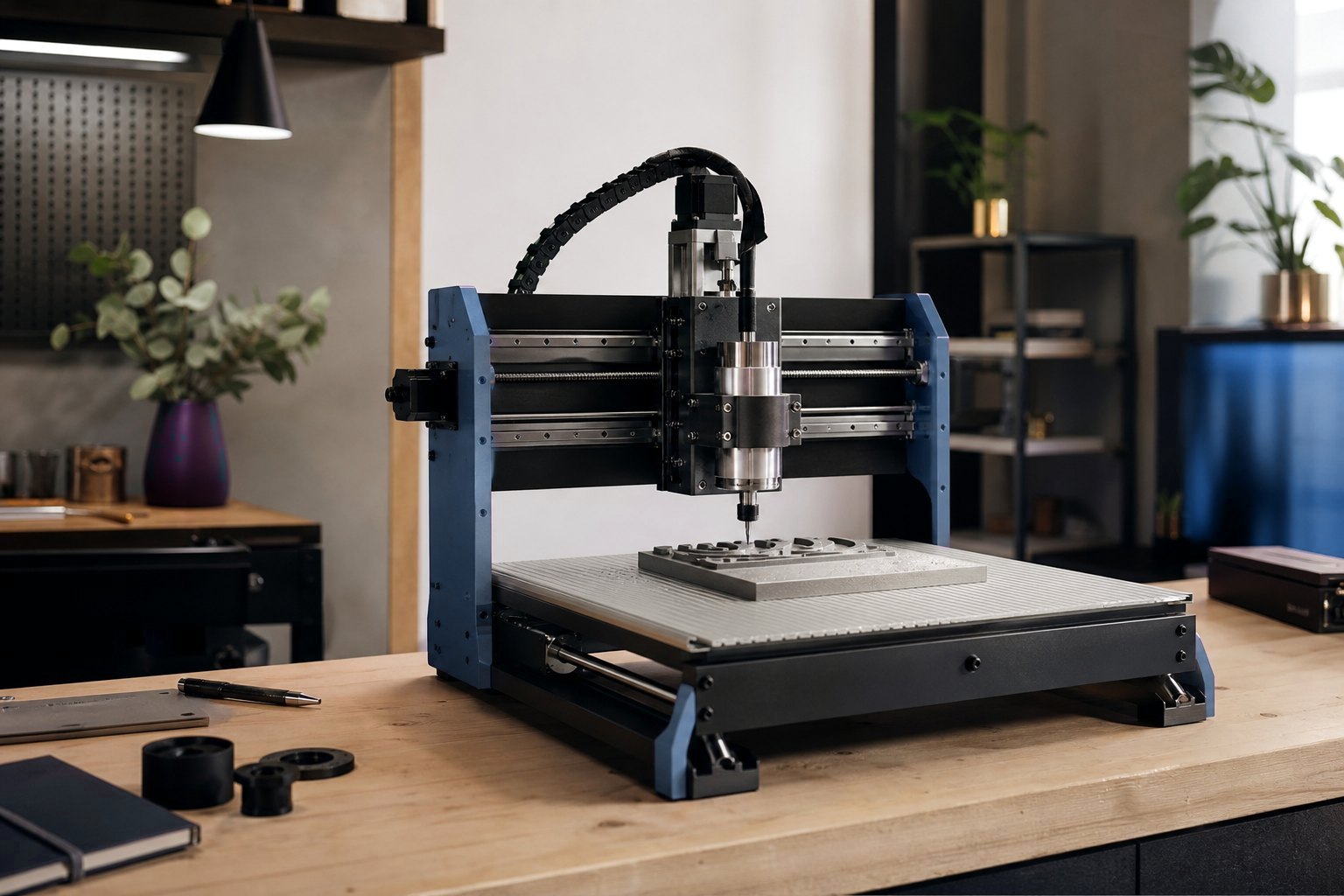
The Light Milling Kit adds the hardware and setup needed for owners moving beyond routing into lighter milling work. It is intended for desktop CNC users who need a more suitable foundation for careful cuts in tougher materials.
Material choice changes the whole job before the first toolpath runs. Aluminium plate, acetal, nylon, and dense plastics each need different cutter geometry, feed settings, and clamping confidence on a desktop machine. In Johannesburg, Durban, Cape Town, and smaller towns, makers often need one bench to cover prototyping, fixture parts, and short-run component work without turning the machine into a full industrial mill.
Begin with a bench and spindle check before cutting tougher material. A quick record of tool stick-out, vice or clamp position, and spoilboard condition makes later resets far simpler when a cutter is changed or a part needs to be rerun. That habit is especially useful on compact machines where a few millimetres can alter rigidity.
Included setup for tougher cuts
This kit adds the hardware and setup needed when routing settings are no longer enough. The aim is a desktop CNC foundation that better supports lighter milling passes, cleaner workholding, and more deliberate machine checks. Notes for the machine can then match the actual stock, cutter, and cut depth used on the bench.
Before expanding into metals or harder plastics, check machine compatibility, available accessories, and the current bench layout. Send details with the spindle model and the machine footprint so clearance, extraction, and workholding space can be checked.
Workshop conditions that affect cuts
Desktop milling asks more from the bench than sheet routing usually does. Existing jigs, collets, vices, clamps, and extraction all influence whether the Light Milling Kit fits the machine and the kind of parts you want to make. If the workshop handles once-off prototypes and repeat jobs on the same table, keep those setups separate in your notes.
Coastal air can push rust prevention higher up the maintenance list, especially on exposed steel tooling and fixtures. Inland dust builds up quickly around rails, lead screws, and work surfaces, so cleaning intervals may need tightening when chips replace mostly fine router dust. Power cuts also matter, because longer milling operations benefit from planned start times and clear recovery steps if a run stops midway.
Operated by Astros Marketing (Pty) Ltd from 2 Makro Place, Sunnyrock 1401.
What to send with enquiries
Send the material type, stock thickness, and the kind of parts being machined. Include what cutter sizes you expect to use and whether the machine will cut mostly plastics, occasional aluminium, or both. If a previous setup struggled, mention chatter, poor finish, tool breakage, or workholding movement.
Keep the machine note with the job record and the material sheet after installation details are finalised. That makes it easier to track which settings worked for each stock type, especially when a school, buyer, or workshop manager needs the exact configuration later.
What our Benchtop CNC customers say
Verified Google reviews