
Insights
Dust Wipes
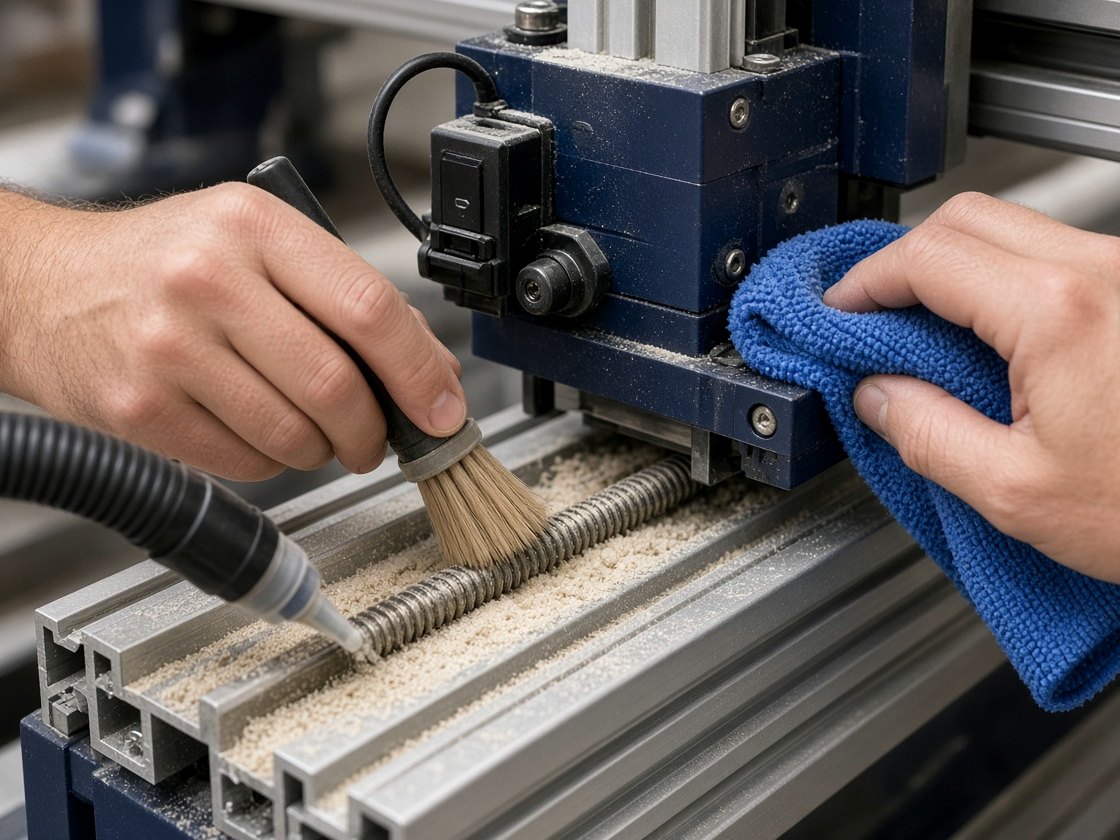
A cleaning note on dust control around rails, lead screws and electronics before buildup causes trouble.
Dust is normal in routing and light milling, but neglect is optional. Dust Wipes is our note on the short clean-downs that help keep motion parts, limit switches and work areas usable between jobs.
Dust Wipes is about the quick clean that happens before fine debris turns into drag, false limit trips, or dirty control boxes. On a desktop CNC bench in Gauteng, Durban, or the Cape, MDF powder and light aluminium swarf settle in very different ways, so the note stays focused on rails, lead screws, switch points, and cable entry areas.
Rails, screws, and switch points
- Rails brushed before residue hardens
- One close photo of the dusty area
- Job note names the dirtiest material cut
- Cleaner, brush, and wipe method recorded clearly
Between-job wipe-down routine
Dust Wipes covers the regular cleaning that keeps fine debris away from rails, lead screws and electronics. It is a simple maintenance note for workshops where dust buildup can quietly turn into lost accuracy, rough movement or electrical trouble.
A useful clean-down starts with what was cut last. MDF leaves a fine powder that creeps into rails and switch housings, plastics can cling by static, and aluminium chips must be lifted away without being dragged across moving parts. In smaller workshops, that usually means a soft brush, a vacuum kept near the bench, and a dry wipe for exposed surfaces.
Check the machine while the dust is still fresh enough to identify. Build-up around the lead screw nut, rail edges, and cable tracks often shows where extraction is weak or where chips are being thrown back under the gantry. A pinned note above the bench helps the next operator repeat the same cleaning points after each run.
Problems to prevent
The aim is not a spotless workshop. It is to keep motion smooth, keep limit switches free of packed dust, and stop fine debris from migrating toward power supplies and control electronics. A short wipe at the end of a job can matter more than a rare deep clean after several neglected runs.
Use Dust Wipes as the maintenance reference before expanding into larger process changes or enclosure changes. Give the crate, cable routing, and accessory shelves a quick look as well, because loose dust often settles beyond the cutting area and returns to the machine on hands, stock, or tools.
- A wipe routine suited to desktop CNC benches
- Problem areas photographed before cleaning starts
- Further reading: Systems, Labs, Insights
- Cleaning notes shared with the operator
Dust conditions across South Africa
Local workshop conditions change how often this job needs doing. Inland benches can collect dry abrasive dust very quickly, while coastal air can leave residue clinging to surfaces and hardware if cleaning is left too long. Where benches are tight and machines share space with assembly or sanding, wipe-down discipline matters even more.
Power cuts also affect dust control because interrupted jobs often leave chips sitting on rails and around the spindle longer than planned. Restarting after an outage is a good moment to clear travel paths, inspect switch flags, and check that no debris has settled into electronics vents. On humid days near the coast, storage cloths and wipes should be kept clean and dry so they do not transfer grime back onto the machine.
Operated by Astros Marketing (Pty) Ltd from 2 Makro Place, Sunnyrock 1401.
Shop notes worth recording
A cleaning note on dust control around rails, lead screws and electronics before buildup causes trouble.
Record the clean-down on the same day as the job if the machine is shared. It helps to note the material cut, where dust gathered most, and whether rails, lead screws, or electrical areas needed extra attention. That gives a lecturer, buyer, or workshop lead a plain maintenance trail tied to the actual work done.